Wednesday, March 24, 2010
1950's Culture
Mccarthyism

Joseph McCarthy was a anti communist activist. He was a republican from Wisconsin. After learning he was an ineffective legislature he looked for a winning issue in order to be elected in 1952. Looking for an issue McCarthy stated that communists were taking over the American government. He took advantage of peoples fear of communism and made countless claims against innocent people. These attacks on the "suspected" communists became known as McCarthyism.
During the period he was in the senate, he made accusations of having in his hands the names of 57, 81 and 205 communists in the senate, but he never actually gave a single name. He also accused the entire democratic party of 20 years of treason for allowing communist infiltration of the government. Another tactic he used was only stating his accusations in the senate, where he had legal immunity from being sued for slander.
Republicans did very little to stop the madness because they wanted him to win the presidential election based on his popularity. However, in 1940 his plan backfired, when he made accusations against the U.S. army. This resulted in a nationally televised investigation, and because of this he lost public support. The senate condemned him for improper conduct, and three years later he died from alcoholism.
There are a wide variety of effects McCarthyism had on the American people. For example, millions of Americans were forced to loyalty oaths and undergo investigations. It also caused many people to be scared and question their right of free speech. Anti-communism continues to drive U.S. foreign policy even today.
1950s Culture
- Angela
1950's Culture
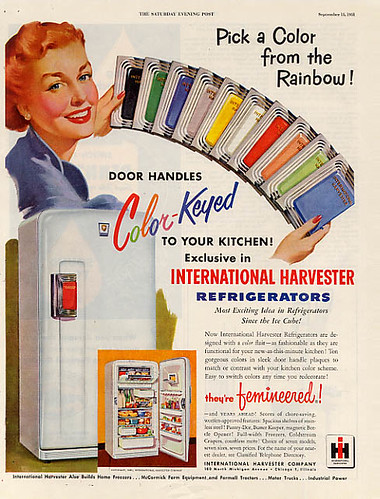
Consumerism also experienced an increase. Material goods became equated with success, and people bought hundreds of new products. Recreational items such as televisions, tape recorders, and record players were also popular; many tasks were being completed by electrical household appliances and Americans founds themselves with more and more leisure time.
Household appliances were not the only ubiquitous products. Automobiles suddenly became and available commodity when the war ended. The abundance of petroleum led to inexpensive and plentiful fuel for consumers. Conforming, suburban residents found themselves in need of a car to drive to their jobs in the cities.
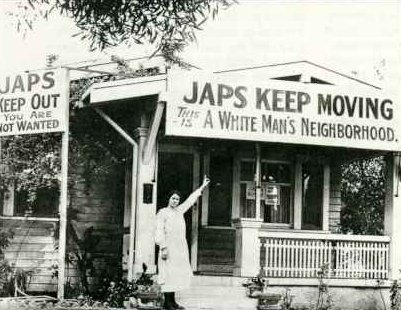
But not all aspects of society had the opportunity to live like this. The mass movement of white Americans from the cities to the suburbs took economic resources away with them. The rural poor were forced to migrate to the inner cities. Most of those who were affected were minority groups.
-Grace Mi
April - Poetry Month
Thursday, March 18, 2010
Blog Dates to Remember
March 31(Wed.): Turn in a copy of posting #3 and COMMENTS sheet
April 28 (Wed.): Create & publish to class blog posting #4
May 5 (Wed.): Hand in a COPY of the posting #4 and COMMENTS sheet
Thursday, March 11, 2010
1950's Culture: Consumerism and Conformity


After the war, businesses expanded rapidly and the economy skyrocketed. Industrial jobs became less common, and more people worked in higher-paying jobs usually in sales or advertising. Franchises began popping up around the country- McDonald's, for example, was one of the most successful franchises of the time and today it is also the largest. The significance of these franchises was that they helped to standardize what people ate. The 50s was also a conformity movement, and in ways besides their diet, American lives were being more and more standardized. A loss of individuality had to be paid in exchange for economic advancement. In the business world, there was no room for creativity.
Another theme during the era was the exploding population, commonly called the "baby boom". When soldiers returned home, they settled into family life again. During the 50s, there was a large emphasis on marriage and family, especially for women. Men were back in the work force, and women became homemakers once again. The American dream of the 1950s was: single-family home in the suburbans, safe healthy environment for children with good schools nearby, and jolly neighbors all around. The dream house also had all the latest technology in household appliances, so that the woman who stayed at home all day would have to do less work and she could be happier and livelier. Less work meant more leisure time, and during the 50s Americans had more of that than ever before. With more vacation time, automobiles played a significant role in the 50's lifestyle. Now not just a commodity, cars even had their own style. Many of them were marketed for fashion and fun. With the automobile came drive-thru at franchises, and franchises meant consumerism. Buy, buy, buy became the mentality all around the media and at home.
Although the 1950's were all about conformity, youth rebelled stronger than ever. They shaped the pop-culture movement during this time: for the first time ever teens dressed differently from their parents and they listened to different music. Rock and roll started as a trend among youth but grew unto older generations as well. These youth moved on into the 60's to create the decade which became the rebuttal of the 50's: the era of non-conformity.
by Mingming
Wednesday, March 3, 2010
Tuskegee Airmen

The 99th pursuit Squadron was an all-back squadron of brave men, who played a mayor part in Italy fighting against the Germans. They were called the Tuskegee Airman. This squadron registered its first victory against an enemy aircraft, and created impressive strategic strikes against the German forces throughout Italy. The Tuskegee Airman won two distinguished Unit Citations (the military’s highest commendation) for their outstanding aerial combat against the German Luftwaffe. This group of one of many minorities groups who tried to help during the war, and made huge accomplishments throughout the war.
by edoardo
Japanese-Americans Confined during World War II


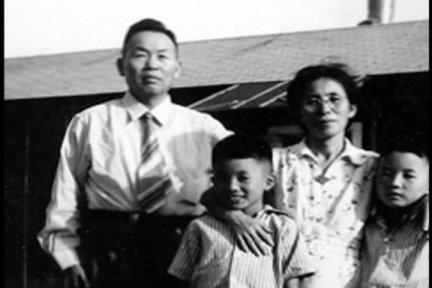
In February 1942, President Roosevelt signed an order requiring people of Japanese descent living on the West Coast to be removed and placed in “relocation centers”, which were essentially prison camps. Approximately 110,000 Japanese Americans were relocated, two-thirds of which were Nisei (of Japanese descent but born in the

Families were forced to sell their homes, businesses, and possessions for low value. The confinement camps were barren and isolated, and children were separated from their parents for most of the day with the exception of breakfast. Life within the barbed-wire fences was both tragic and terrifying. In the end, no specific charges were filed against any Japanese Americans, and no evidence of sabotage was ever found.
Because of the injustice they faced, Japanese Americans fought for a very long time for compensation. In Korematsu v. United States in 1944, the Supreme Court justified the evacuation of Japanese Americans as a “military necessity.”
The Japanese American Citizens League (JACL) pushed the government for restitution to everyone who faced internment. Finally, in 1990, a $20,000 check was sent to every Japanese American who was confined in a relocation camp.
“We can never fully right the wrongs of the past. But we can take a clear stand for justice and recognize that serious injustices were done to Japanese Americans during World War II.” –President George Bush
National Memorial in Washington, DC


-Mingming C.
Women in Wartime

During the WWII, America was in need of military work force. The Army Chief of Staff General George Marshall formed the Women’s Auxiliary Army Corps (WAAC) in order to fulfill this demand. He said that there were many jobs that could be done better by women. Women volunteers would serve in noncombat positions under this bill. Though there was a lot of opposition from members of Congress, the bill establishing WAAC became law on May 15, 1942. Women received salary though they didn’t have as many benefits as the male soldiers did. In July 1943, the U.S. Army dropped the “auxiliary” status, and the WACs started to receive full U.S. Army benefits. They served as nurses, ambulance drivers, radio operators, electricians , and pilots.
The defense contractors warned the Selective Service System that AMerica didn't have enough workers in the beginning of WWII. However, they were proved wrong when nearly 18 million workers started contributing for the war in 1944. Out of the 18 million workers laboring in war industries, more than 6 millions were women. Factories thought that women did not have the strength to do physical work and were unwilling to hire them at first. However, when they realized that women operated machines as well as men, they started to hire a lot of women. Women had proved that they could do jobs and contribute to the nation as well as men did.
Tuesday, March 2, 2010
Harry Truman’s Presidency
Harry S. Truman was born in 1884 in the state of Missouri. After the WW I, he invested in a men clothing store, but the business failed and he sought a career in politics. His blunt and outspoken style won both loyal friends and bitter enemies. As president, his decisiveness and willingness to accept responsibility for his decisions earned him respect that has grown over the years.
Truman put his presidency on the line for civil rights, and in 1946 created a President’s Commission on Civil Rights. Following the group’s recommendations, he asked Congress for several measures, including a federal antilynching law, but Congress refused to pass the measures. In 1948, he issued an executive order for integration of the armed forces and ordered an end to discrimination in the hiring of government employees. Although many Americans blamed Truman for the nation’s inflation and labor unrest, he won the elections in 1948. Congress raised the hourly minimum wage from 40 cents to 75 cents, extended Social Security coverage to about 10 million more people and initiated flood control an irrigation projects.
Despite some social and economic measures (Fair Deal, an extension of Roosevelt’s New Deal, for example), Truman’s approval rating sank to an all-time low of 23 percent in 1951.
Rosa Parks

Rosa Parks, is known as the "mother of the civil rights movement". She was one of the most important citizens of the 20th century. Rosa Parks lived in Montgomery, Alabama, at the time of her righteous act. In December of 1955, she refused to give up her seat on a city bus to a white passenger could sit down. The bus driver had her arrested, for basically not being "nice" to a white passenger. Rosa Parks was convicted of violating a local ordinance.
Her act inspired a citywide boycott of the bus system by blacks that lasted more than a year.This really hurt the bus system considering that blacks were the main people to ride the bus. AS a result of this boycottt Martin Luther King, Jr, started to speak out for black all over the south. The U.S. Supreme Court decision outlawing segregation on city buses. Over the next four decades, she helped make her fellow Americans aware of the history of the civil rights struggle. This pioneer in the struggle for racial equality was the recipient of some honors, including the Martin Luther King Jr. Nonviolent Peace Prize and the Presidential Medal of Freedom.
Rosa Parks, Woman of Soltitude
Journey to the New Frontier

Space Program:
April 12, 1961 was the first time a human was sent into space. This project was launched by soviets. Kennedy saw this soviet advance in science as a challenge between capitalism and communism. He wanted to surpass the soviets by placing a man on the moon. With the drive of competition, the United States sent a man on the moon within a month. Americans also sent a satellite into space named the Telstar, which relayed television pictures across the world. NASA began constructing launch facilities in Florida and an admission control center in Texas. The Americans caught up to the Soviets in the space race, and national pride was restored.
-Felix, Kevin
Women in Wartime
Due to the war, industries and other businesses were short of male workers. Contractors then began to hire women to work in factories, though many believed that women lacked the stamina to work in factories. But when women proved themselves capable for the job, the number of female workers increased to 6 million, about a third of the workers in the United States. Despite these gains, women still earned sixty percent of what men earned.
Grace
1950's Culture

During 1950's the economy boomed and many Americans enjoyed material comfort. The business expanded rapidly, economy prospered, and new technologies and business ideas created opportunities for many Americans.
More people worked at higher paid jobs than ever before, especially in sales and advertising. Franchises were born and companies started to mass produce. Mcdonalds, for example was one of the biggest franchises in the 50's, mass producing hamburgers at 15 cents each. Large corporates and a board of directors were brought about in the business world. Xerox, American telephone and telegraph, and General Electric were a few of the major companies.
Americans enjoyed the highest level of living in the world. Franchises standardized the way of living. Most Americans also had stable jobs and steady income. Employees worked 40 hour weeks, and earned several weeks vacation per year. Most Americans worked in cities, but few lived in them. Due to highways and affordable automobiles, suburban lifestyle was ideal for Americans. The suburbs embodied the American dream of affordable single family housing, good schools, and a safe and healthy environment for children. Most people owned dishwashers, dryers and power lawnmowers. These labor saving devices allowed more time for recreational activities. More fans attended football and baseball games and others watched on tv sets.
Radical Rosa!

Personal Backstory
Born 1913, Rosa Parks was an African-American activist for the Civil Rights movement. A seamstress and an officer for the NAACP, she often protested against everyday segregation. For example, she refused to use segregated drinking fountains and elevators. Parks began her activism in the Civil Rights Movement when she began working as a secretary of the Montgomery division of the NAACP in 1943. But her fights for equality did not stop there.


What was going in her Time
During the time Rosa Parks became more involved in the Civil Rights Movement, things began to change. The Brown vs Board of Education case was setteled and outlawed segregation in schools. Four days following the Brown vs Board of Education decision, the mayor of Montgomery was asked to desegregate the Bus system, but he refused. This set the stage for Rosa Parks' famous protest!
The Protest
Rose Parks disagreed with the mayors decision and was not afraid to show it. On December 1st, 1955, Ms Parks sat in the colored on a crowded Montgomery bus. When a white man requested to be seated away from any African-Americans, Ms Parks and her friends were asked to vacate the rows and move to the back of the bus. Ms Parks refused to comply and to let her herself to be treated as a second class citizen. She remained in her seat. Parks was then arrested for her "act of disobiedence".
As news of her arrest spread, leaders of the African-American community started the Montgomery Improvement Association, headed by a young Martin Luther King, Jr. He and other leaders like Jo Ann Robinson and NAACP leader E.D. Nixon planned a boycott on the bus system. They planned car pooling and had people walk instead of drive for 381 days. Support from the United Auto Workers, Montgomery's Jewish Community, and sympathetic White southerners lead to the 1956 outlaw of bus segregation by the Supreme Court.
Cat Volpe
Gayan
Japanese Concentration Camps in America
Women in Wartime
The Tuskegee Airmen
During World War II, many African Americans were subject to the Jim Crow laws—locally established laws which held poorer treatments for African Americans—and therefore suffered racial segregation. Such separation was evident in the American military, as separate units and divisions were created for African Americans, as well as other minorities. One of the most prominent divisions was the Tuskegee Airmen, a unit of African American combat pilots who were part of the 332nd fighter group.
The Tuskegee Airmen first earned their fame through in Sicily, where the Allies launched their invasion against Italy, resulting in Benito Mussolini’s resignation. After registering their first victory against enemy aircrafts did the Tuskegee Airmen get their names known by the public. After their first triumph, the Tuskegee Airmen continued to impress America by their several victories against the German Luftwaffe. As a reward for their exceptional aerial combat, the Tuskegee Airmen received two Distinguished Unit Citations, as the military’s highest commendations.
Not only did the Tuskegee Airmen receive fame for their brilliant work, but they helped ease the tensions of the prejudice and segregation. By ignoring the criticism they faced upon establishment, the Tuskegee Airmen were able to successfully complete their missions, and earn their names as American heroes.


Written by-Marlin and Jason
March 2, 2010 Period A